The gap
Static data, dynamic biology
Today's perturbation atlases measure cells at fixed endpoints. The transient regulatory states that drive commitment, resistance, and combination effects are structurally invisible.
AI for Science · AI for Biology · AI for Drug Development
ChronoCell-WM brings frontier AI to the heart of biology: a virtual cell that does not just predict endpoints, but simulates the regulatory path that produced them — built by a UC San Diego collaboration spanning single-cell biology, generative world models, controllable reasoning, and production-grade ML systems.
Vision · AI for Science
We believe the next frontier of AI for Science is not predicting labels — it is simulating the causal processes that produce them. Modern single-cell genomics tells us what cells become after a perturbation, but not how they got there. ChronoCell-WM closes that gap.
Given an initial cell state and an intervention program — a gene, a drug, a cytokine, a combination, a schedule — the model simulates the regulatory trajectory step by step, producing endpoint predictions with the mechanistic path that produced them.
“If a cell starts in state S₀ — what happens under A, under B, under A+B, under A→B, or under B→A?”
Why it matters · AI for Drug Development
~90%
of drug candidates fail in the clinic — often from resistance, scheduling, or kinetic toxicity that endpoint data cannot reveal.
$2B+
average cost to bring a therapy to market — much of it lost discovering causal mechanisms only after late-stage failures.
104+
combinatorial intervention programs (doses, orders, schedules) per disease — exhaustive wet-lab screening is intractable.
The gap
Today's perturbation atlases measure cells at fixed endpoints. The transient regulatory states that drive commitment, resistance, and combination effects are structurally invisible.
The opportunity
A virtual cell that simulates how regulatory states evolve under intervention — not just where they end up — could replace much of the discovery search with in silico hypothesis generation.
The unlock
Recent advances in minute-scale single-cell profiling now make causal regulatory dynamics directly observable — providing the missing supervision for true world-model learning.
The approach · AI for Biology
ChronoCell-WM is uniquely positioned because it brings together four research programs that rarely live in the same team — each already validated through public technologies, peer-reviewed publications, and open-source releases. Together they cover the full stack required to move biology from endpoint observation to in silico simulation.
Wang Lab · ChronoSeq platform & regulatory inference
Minute-scale genome-wide single-cell profiling that reveals how regulatory states evolve under intervention — the missing causal substrate that endpoint atlases cannot provide.
Q-Lab · Constrained generation & diverse paths
Energy-based constraints, diverse-path search, and uncertainty calibration that keep long-horizon rollouts on the biological manifold — making the virtual cell interpretable and falsifiable.
MixLab · Action-conditioned simulation & reasoning
Frontier-scale world models that represent state, action, and transition — proven on video, language, and reasoning tasks, now extended to cellular dynamics and counterfactual rollouts.
PICASSO Lab · Branching workloads & efficient inference
Production-grade compiler, scheduling, and caching infrastructure validated on the largest open models — the systems substrate that makes counterfactual rollout at biological scale tractable.
The team
ChronoCell-WM requires capabilities that rarely live in one team: minute-scale single-cell biology, world modeling at frontier scale, constrained reasoning, and production-grade ML systems. The four collaborating labs at UC San Diego cover every layer — with an existing track record of co-authorship.
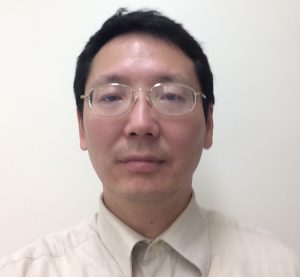
I — Temporal single-cell biology
Professor, Chemistry & Biochemistry · UC San Diego
Wang is an internationally recognized leader in regulatory genomics and single-cell biology. His lab developed ChronoSeq — the technology that pushed single-cell transcriptomics to minute-scale temporal resolution — and has built directed transcription-factor atlases validated by CRISPR perturbation (Nature, 2026). Decades of expertise in regulatory network inference and experimental validation anchor the project's biological foundation.
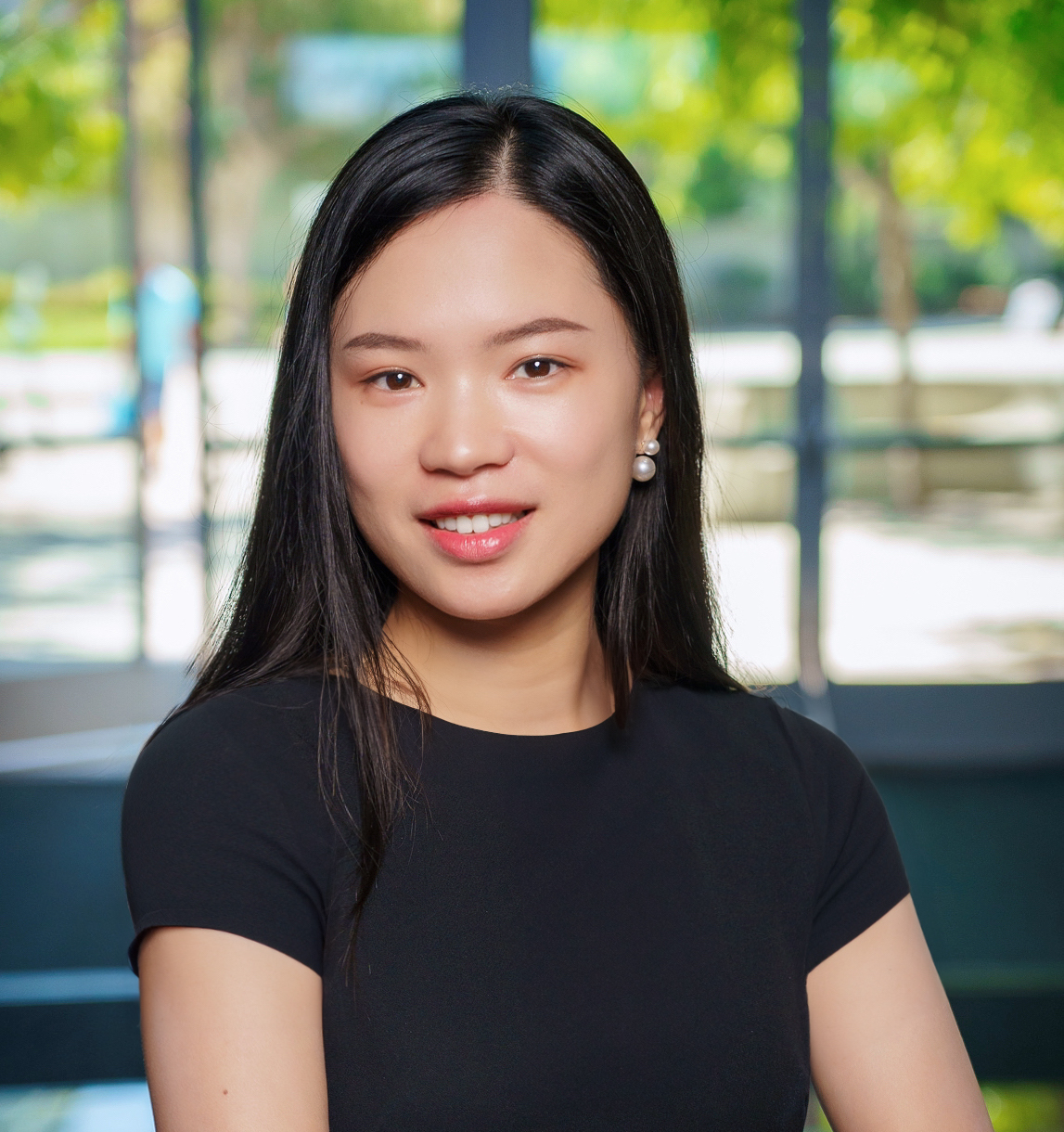
II — Controllable, plausible reasoning
Assistant Professor, CSE · UC San Diego · Q-Lab
Qin's research focuses on controllable, constrained, and diffusion-enhanced reasoning. Her work develops methods for generating diverse yet scientifically plausible reasoning trajectories under explicit constraints. In ChronoCell-WM, this expertise provides the foundation for constraint-aware cellular simulation, enabling biologically consistent and interpretable long-horizon rollouts under complex perturbations and uncertainty.
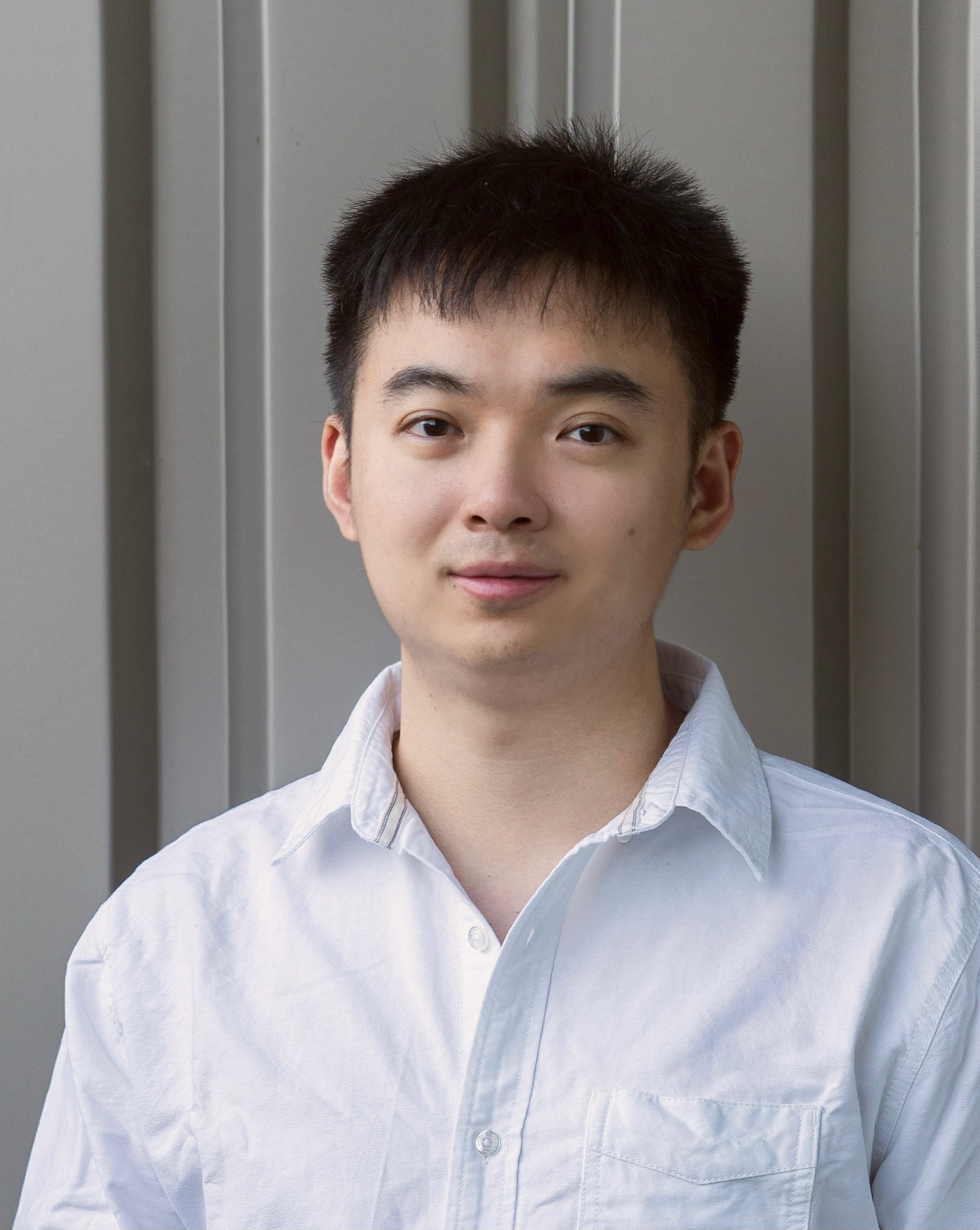
III — Generative world models
Assistant Professor, HDSI & CSE · UC San Diego · MixLab
Hu pioneers general-purpose world models for machine reasoning. His group built Pandora (action-conditioned video world model trained on 1000+ H100s), RAP (reasoning as planning with a world model), and the widely adopted LLM Reasoners library. His framework for action-conditioned counterfactual simulation maps directly onto cellular dynamics.
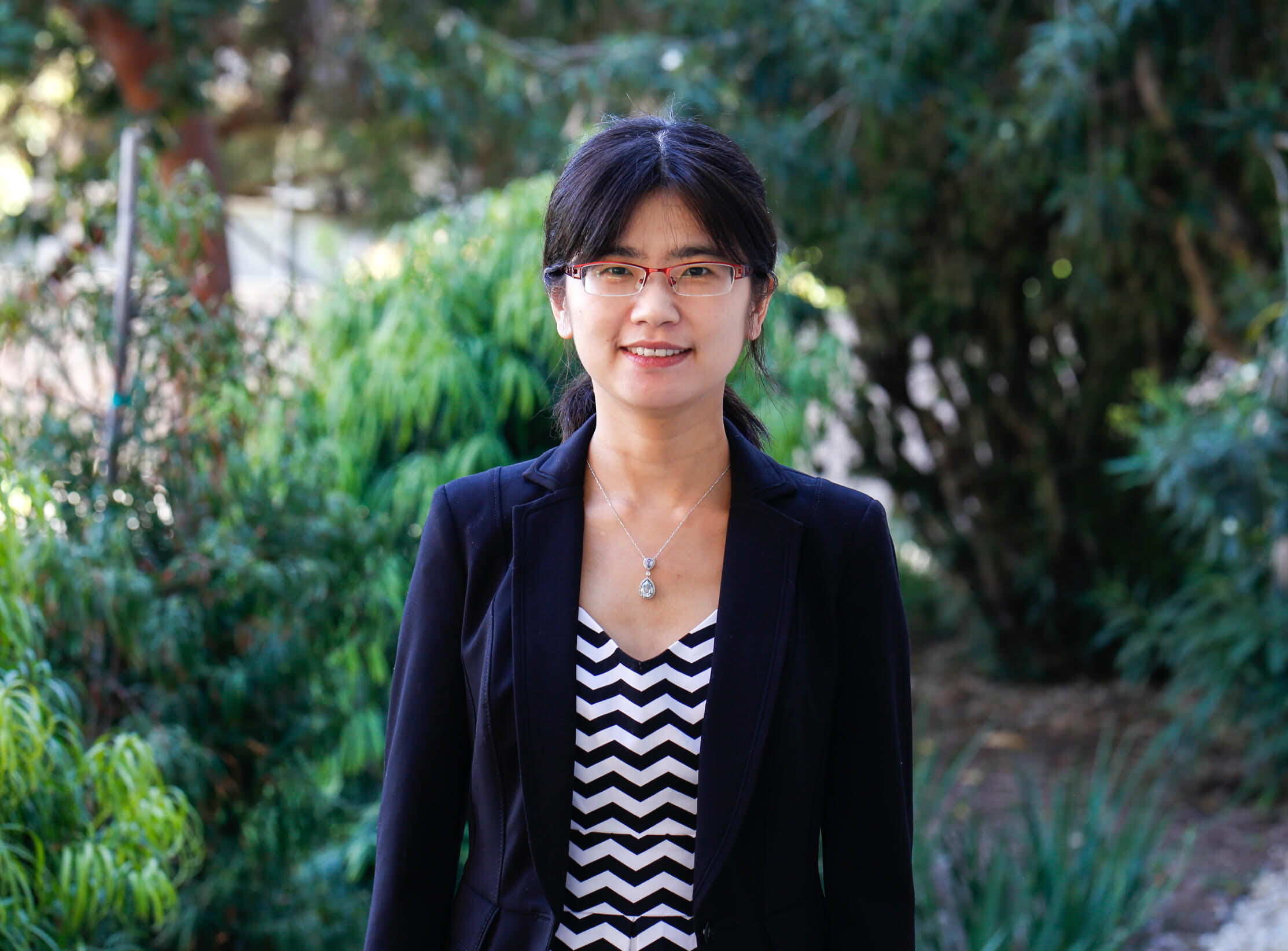
IV — ML systems at production scale
Professor, CSE · UC San Diego · PICASSO Lab
Ding builds the systems substrate beneath frontier-scale ML — WLB-LLM (OSDI '25, validated in production on the largest open models), FastTree (MLSys '25), KVFlow (NeurIPS '25), and others. Her work delivers order-of-magnitude gains in training and inference throughput for branching, heterogeneous workloads.
This is not a new collaboration. Wang & Hu have co-authored four papers; Wang & Qin have three active projects together; Qin & Hu share five co-authored publications across NeurIPS, EMNLP, and ACL; Qin & Ding co-authored a NeurIPS '25 paper. The team has access to UC San Diego's SDSC GPU clusters and dedicated experimental core facilities — the project is execution-ready from day one.
Direction
Three phases, each with a public release. Every phase is designed to be falsifiable — we will know, at each step, whether the model is learning real biology or memorizing labels.
Phase I · Foundation
Public release: seed dataset & first model
Phase II · Extension
Public release: expanded atlas & rollout model
Phase III · Platform
Public release: full atlas, APIs, benchmarks
Resources
Data & protocol
Minute-scale single-cell transcriptomics · protocols, docs, videos.
World model
Interactive video world model with natural-language actions and counterfactual rollouts.
Reasoning library
Open-source library for complex reasoning algorithms over LLMs. 2.3k★.
Simulator
Open-ended realistic simulator for autonomous agents with language-based world editing.
Multi-agent systems
Multi-agent automation of DFT workflows with Pareto-aware planning.
Press
Recent media coverage of the Wang lab's Nature paper on directed TF programming.
Impact
ChronoCell-WM is built to be released. Every dataset, model, benchmark, and API will be open — lowering the barrier to virtual-cell simulation for labs without large screening infrastructure and unlocking the latent value of every existing endpoint atlas in the field.
For under-resourced institutions and labs in low- and middle-income countries, this means access to causal in silico simulation without multi-million-dollar sequencing budgets. For the field at large, it means a new evaluation standard and a compounding network effect: every new perturbation dataset becomes more causally valuable because the transition operator exists.
Interested in collaborating, contributing data, or learning more? Reach the team →